Fast track your career growth Selenium WebDriver Deep Dive
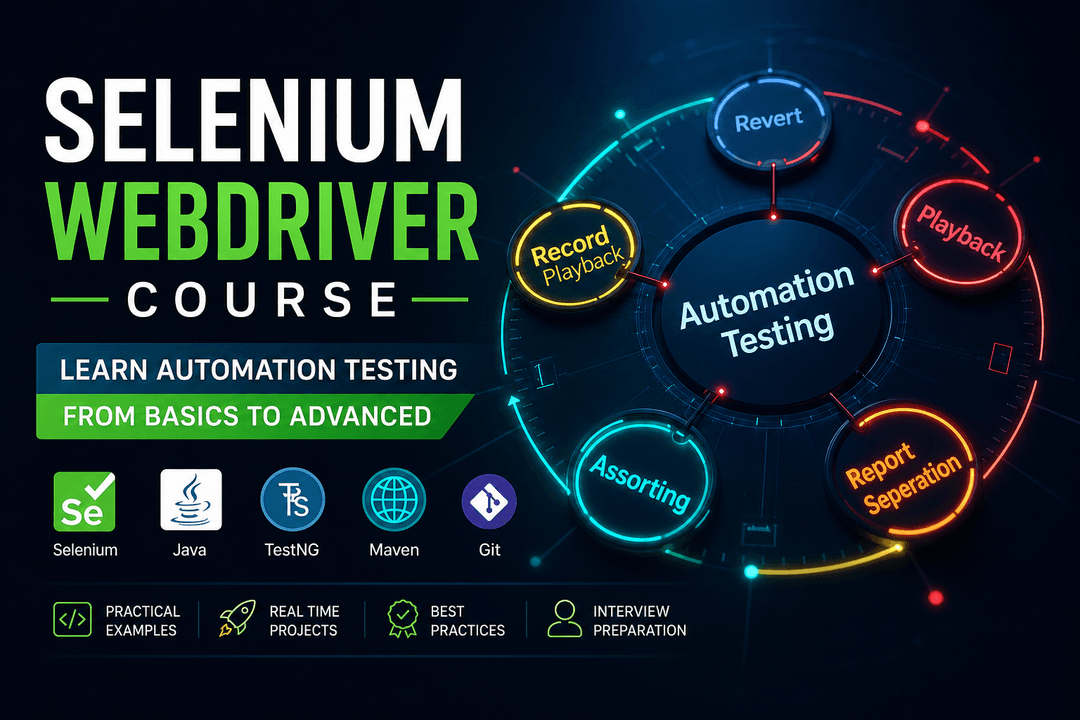
From first script to maintainable framework pieces: master locators, synchronization, cross-browser runs, and reporting so your suites stay stable as the UI changes.
- Hours of Instructor-Led Training
- Hands-on Projects across Web, Data & AI
- Includes Beginner → Expert Level Topics
- Mentor Support, Assignments & Code Reviews
- Job Assistance & Portfolio Guidance
- Jobzenter Certificate of Completion
What You'll Learn
Locators
CSS, XPath, and resilient strategies.
Waits
Implicit, explicit, fluent patterns.
Actions
Keyboard, mouse, and frames.
POM
Page Object and reusable layers.
Grid
Selenium Grid / parallel basics.
CI Runs
Headless and pipeline-friendly execution.
Course Content
- WebDriver architecture and browser drivers
- Opening URLs, navigation, and basic interactions
- Finding elements: ID, name, class, link text
- Taking screenshots on failure
- Project layout for growing test suites
Frequently asked questions

Yes—many teams still rely on Selenium WebDriver for mature browser automation, especially with Java ecosystems and large legacy suites.
Java is still dominant in enterprise QA; TypeScript is growing with modern stacks. Choose based on your stack—or learn both over time.
Content is aligned with current Selenium 4 concepts including improved W3C WebDriver usage and modern driver management.